Four Pillar Friday
Stories, research, and reflections on how we spend our most important currency: TIME

Physical
Range of motion is one of the few qualities about your physiology that does not have to decline with age. Neglect almost guarantees that it will.
That’s the thesis Dr. Kelly Starrett brought to a FoundMyFitness episode with Dr. Rhonda Patrick
His core line: “We should train for life. Not live to train.”
For most of us, the goal isn’t to get better at exercise for its own sake. It’s to build a body that helps carry us across our lives. One that moves well, recovers well, and keeps doing the things you love for a long time.
The most uncomfortable test in the conversation is the sit-and-rise. Stand up. Cross one foot in front of the other. Lower yourself into a cross-legged seat on the floor without holding onto anything. Stand back up the same way without putting a hand or knee down. Score yourself out of 10. Lose a point for every assist.
A 2025 study in the European Journal of Preventive Cardiology followed more than 4,000 adults aged 46–75 for over 12 years. Death rates rose sharply as the score dropped. People in the lowest group had nearly four times the risk of natural-cause death and six times the risk of cardiovascular death compared to those who scored a perfect 10.
You can be strong, fit, even fast. And still fail this test.
We’ve spent two decades optimizing for capacity — bench, VO2, deadlift numbers — and quietly let go of the basics. Getting down to the floor and back up.
Starrett’s prescription is simple and effective. Sit on the floor while you watch a movie. Hang from something every day. Take your hips and shoulders through their full range, not just the ranges your sport asks for.
Range of motion isn’t built in a session. It’s built in a life that asks for it.
When was the last time you sat on the floor for an hour?
Mental
In March 2026, University of Chicago economist Sam Peltzman published a paper called The Happiness Crash of 2020. Using fifty years of General Social Survey data, the gold standard for tracking American wellbeing, he documented “a sudden, sharp and historically unprecedented decline in self-reported happiness in the U.S. population.”
The crash hit in 2020. It is now 2026. It still hasn’t recovered.
The decline ran 10 to 15 percentage points across every age, region, gender, and political affiliation. No group was spared.
But the cohort that fell furthest is the one that should surprise you most.
The wealthy. The well-educated. The high-income, high-asset, professional-class American household. The people who, by every traditional measure, should have been the most insulated lost the most happiness. The poorest Americans, with the least financial cushion, had the narrowest declines.
Wealth did not protect what it was supposed to protect.
The World Happiness Report tells the same story from a different angle. The U.S. ranked 11th in the world in 2012. We sit at 23rd in 2026. Underneath the slide: a quarter of American adults now report eating all of their meals alone…up more than 50% since 2003. Gallup’s CEO summed it up in a single sentence: “Happiness isn’t just about wealth or growth — it’s about trust, connection and knowing people have your back.”
And underneath all of it, one finding worth sitting with. Across fifty years and every demographic, one factor consistently predicted happiness. It wasn’t income. Wasn’t education. Wasn’t IQ or career or health.
It was marriage.
The “marital premium” held even through the crash. Married Americans, on balance, remain net-happy. Unmarried Americans, now 45% of adults over 25, are not. Peltzman calls it “a segregated happiness society.”
Achievement didn’t protect happiness. Connection did.
Financial
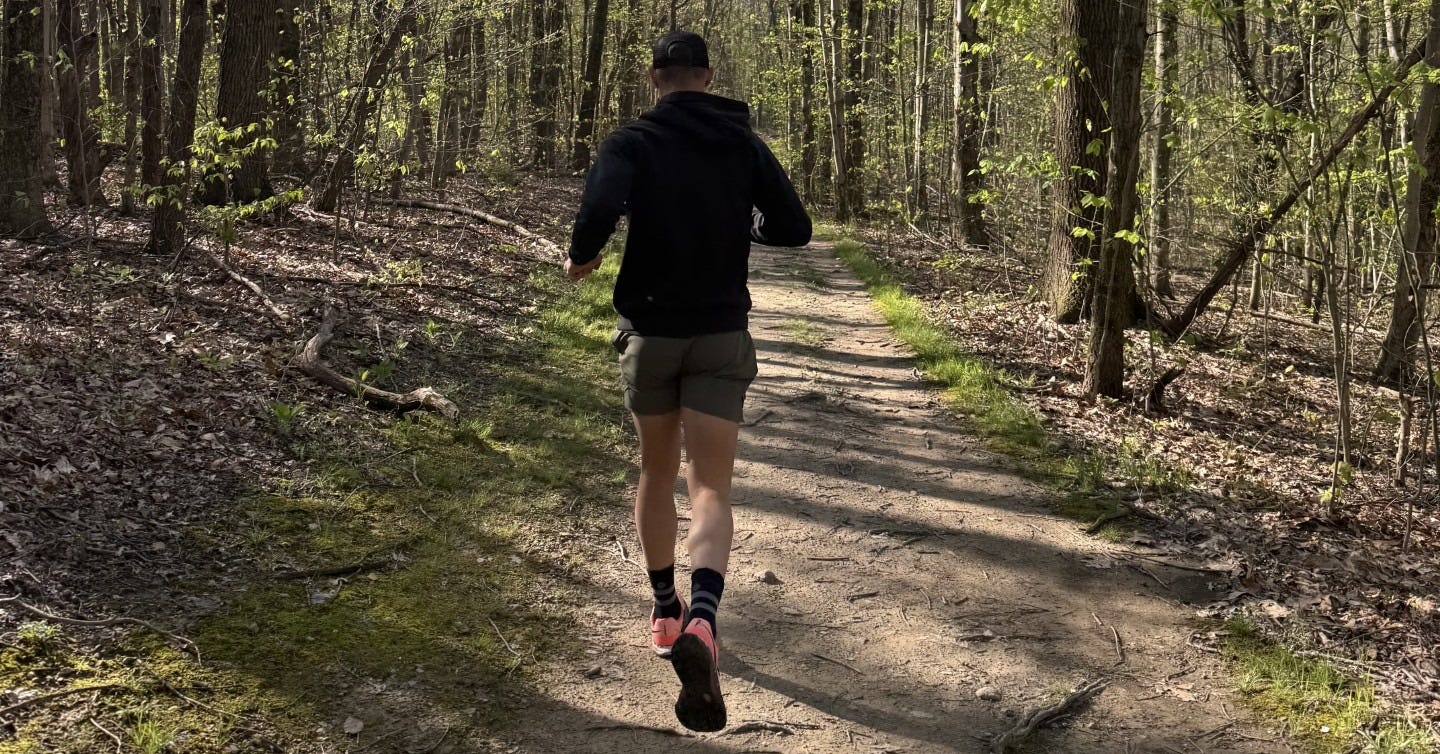
My wife is off this week. Sunny morning. I had already lifted, we got the kids off to school, and Alison was heading out the door for a run. She paused at the door and asked if I wanted to come.
I had a full inbox. A list. The day was already accounted for. Should I work? Probably.
I thought about it for a beat. Then as she was pulling out of the driveway, I grabbed my running shoes and my coffee and ran out the door.
We spent an hour on the trails in the national park.
When people throw around words like agency, or freedom, or whatever the buzzword of the week is, that hour is what I think of. Not a sabbatical. Not a beach. Not retirement. A sunny Thursday morning, an hour on the trails, and the choice to actually go.
Did it impact what I got done today? Sure. Was the stuff I would’ve gotten done going to strengthen my marriage? Probably not.
Most of the financial industry, including the version of it I worked in for twenty years, is built around scaling the number. Bigger accounts. Bigger returns. Bigger nest egg. Optimize until the score gets high enough to justify the trade-offs.
But the trade-offs are where the real wealth lives.
Wealth, the way I’ve come to define it, is the ability to look at your wife pulling out of the driveway on a Thursday morning and say yes. Everything else is just the architecture that lets you say yes more often.
If your money plan doesn’t make that more possible… more “yes” hours, with the people who matter, in the places that mean something then it’s not really a wealth plan. It’s a balance sheet.
The score is real. But you don’t get to take it with you. You get to take the trail with Alison.
Glad I went.
Spiritual
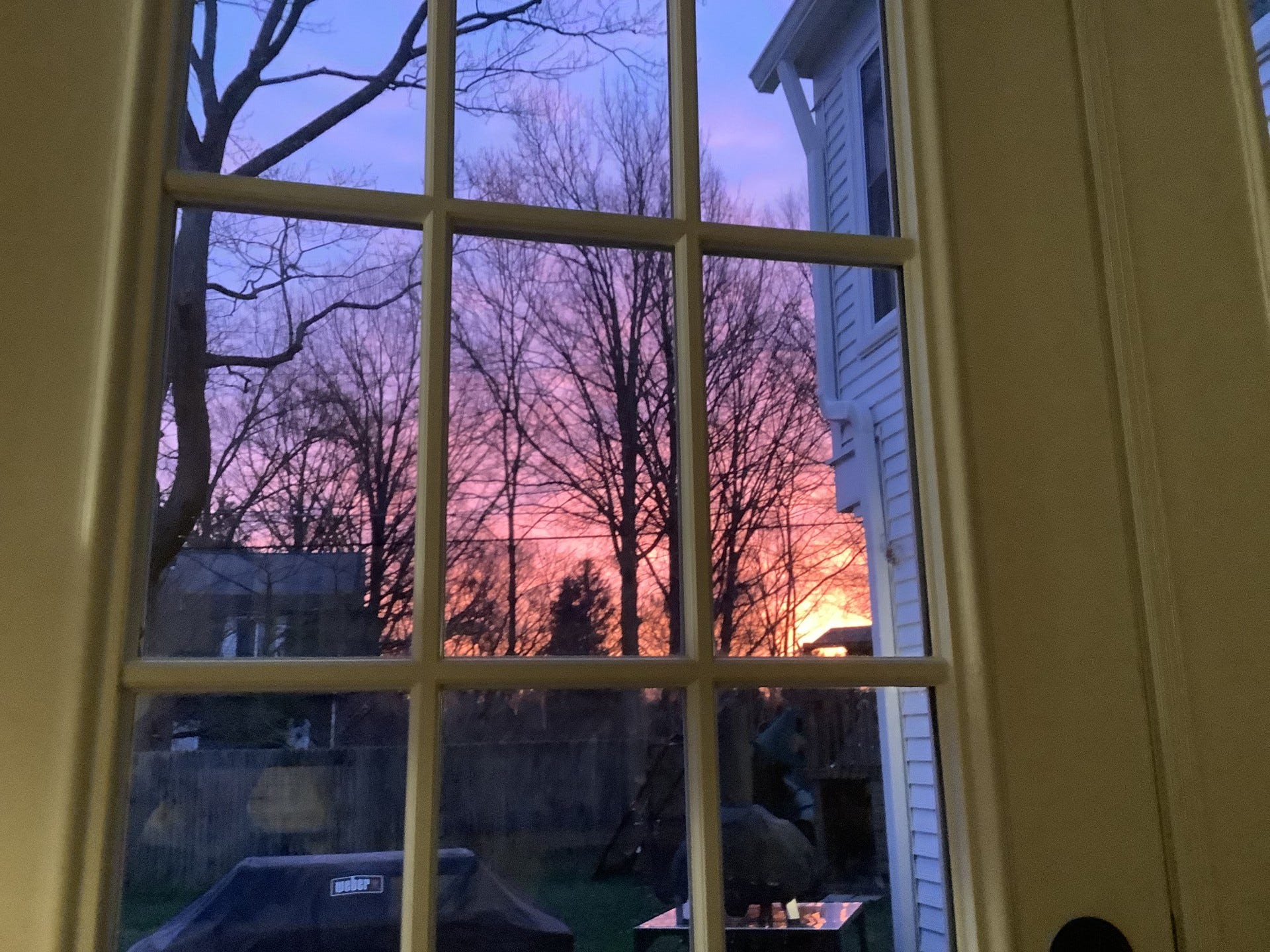
I took a picture from our back door last week. One of those red, glowing sunrises that comes up over the trees and lights up the whole back of the house. The kind that makes you stop and just stand there for a second.
A few hours later I was reading through information about my oldest’s transition to middle school next year. Sixth grade. New school. New building. New everything.
That’s how it works. Kids grow up. Years pass. Schools change. Logically I know all of this. We’ve done it before, every step from preschool through fifth grade.
But this one feels big.
Maybe it’s because middle school is the part of my own life I remember clearly. Sixth grade was where I started searching for some independence. Testing limits. Doing things my parents didn’t know about. Girls. Friends. Sports. Grades. I remember the bus rides. The lockers. The first time it felt like I was making real choices that were mine.
Now I get to watch him walk into that.
The part that’s hard to articulate is the speed. Every parent gets warned. Everyone before you tells you it goes fast. You nod. You smile. You don’t really get it.
And then it’s here. The kid you carried into the house from the hospital is signing up for sixth grade orientation.
The clock is moving and you can feel it.
I think the whole spiritual project, whatever you want to call it, is paying attention before the moment passes. Not because you can stop time. You can’t. But because attention is the only thing you actually have to offer the moments while they’re happening.
The sunrise last week. The conversation in the car. The Thursday that turned out to be a memory you’ll keep for the rest of your life.
Be there for it.
And In The End
From all of us at The 9:03 Collective: thanks for reading. Keep showing up. Stay curious. And never forget that the clock is running, so make it count.
If you’ve been enjoying Four Pillar Friday, the best way to support is simple: share it with a friend, forward it to someone who might need it, or subscribe if you haven’t already. The more people we reach, the more conversations we can spark about living with intention.
Until next week…